THE BIRD
A shy, colourful crow
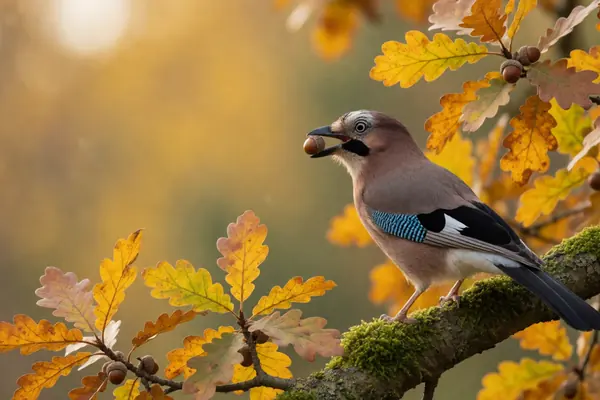
About 34 to 35 cm long, pinky-brown with a white rump and a blue-striped wing panel. You usually hear its screech before you see it.
When to look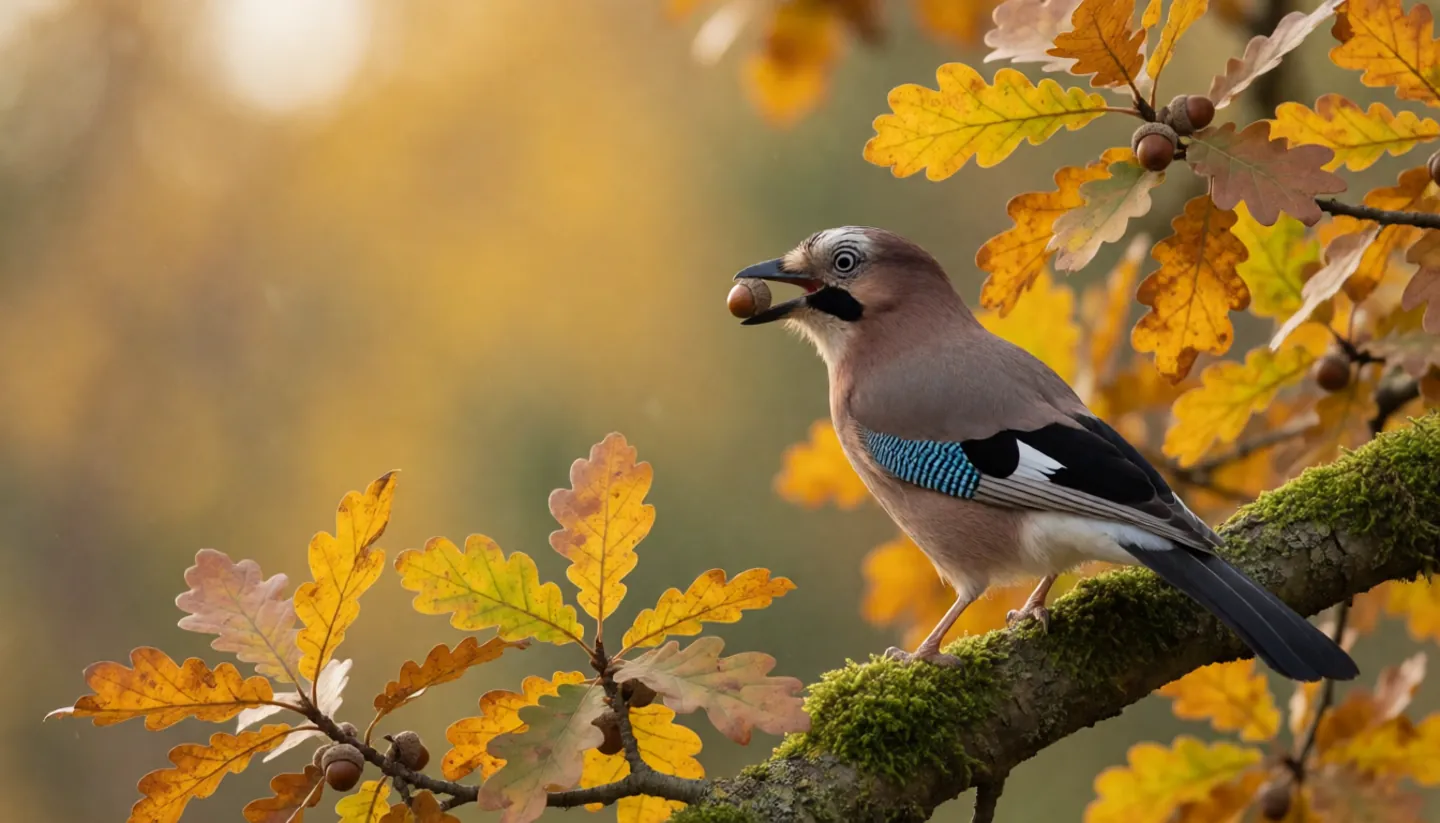
 doodledjay
THE WOODLAND DJ
BURY forget, grow
Meet the jay, the most colourful crow in Britain.
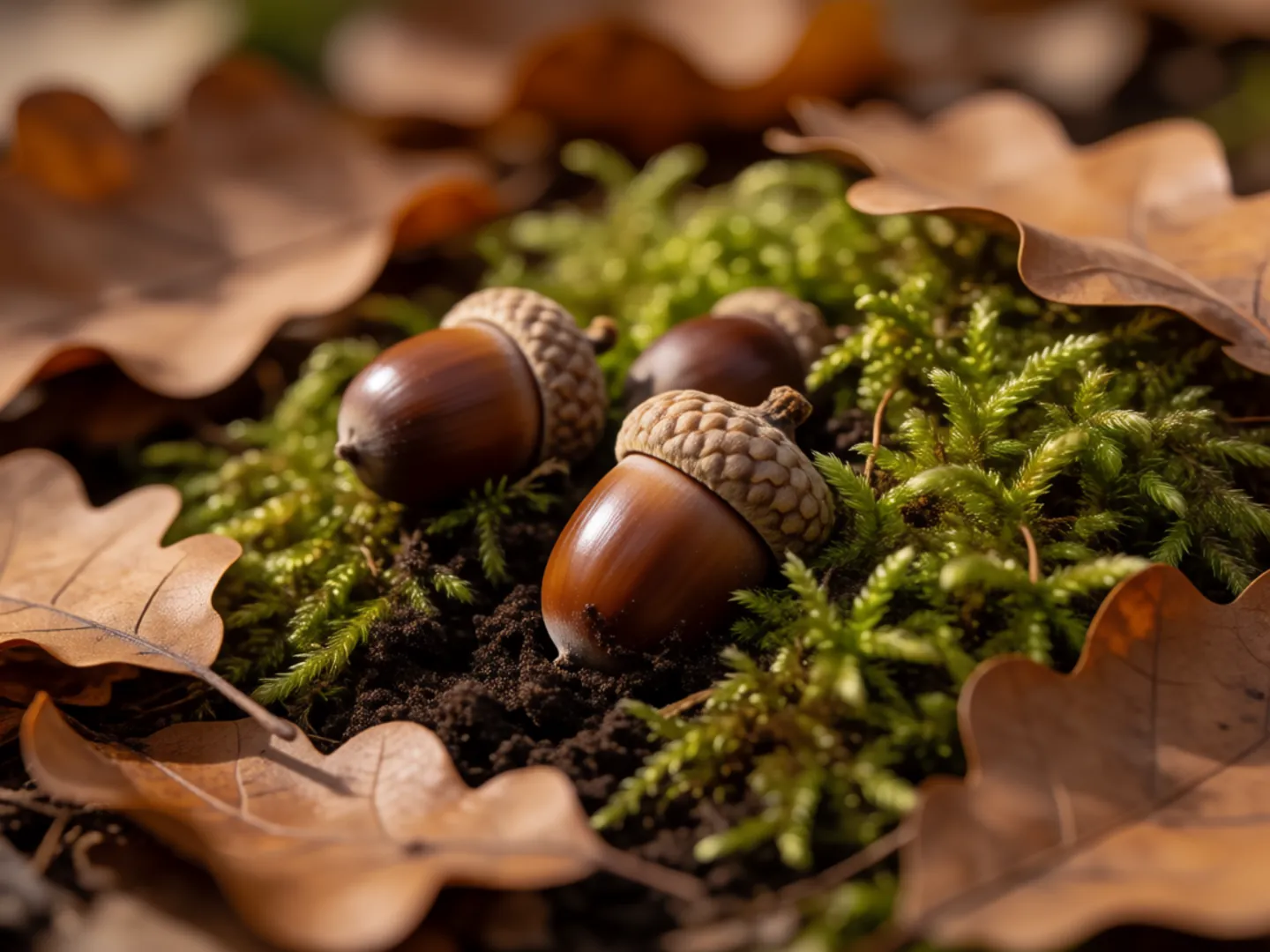
Every autumn jays carry acorns away from oak trees and bury them one by one to eat in winter. Not every store is found again, and the forgotten ones can grow into oaks. The Woodland Trust credits them with the rapid spread of oaks after the last Ice Age.
Updated
What jays do whenTHE SHORT ANSWER
Storing food like this is called caching.
It feeds the jay in winter, and it moves oaks about.
THE BIRD
About 34 to 35 cm long, pinky-brown with a white rump and a blue-striped wing panel. You usually hear its screech before you see it.
When to lookCACHING
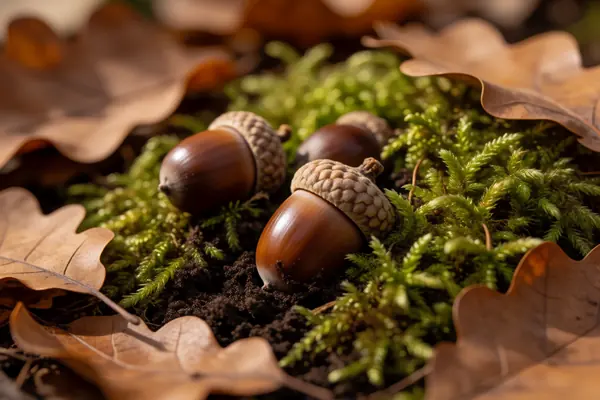
Jays hop about the ground looking for places to hide acorns. Radio-tagged acorns show them stored singly in scattered caches, in moss, leaf litter or between stalks.
See the numbersNEW WOODS
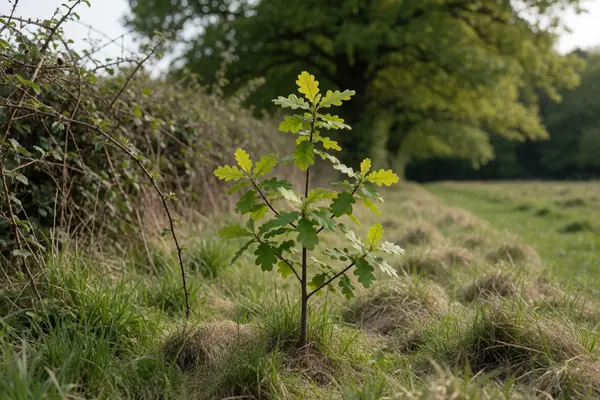
On two abandoned fields in England, oak became the most common tree, probably thanks to acorns buried by jays, squirrels and wood mice.
The rewilding studyA JAY'S YEAR
Pick a season to see what jays are busy with. The bar shows how much acorns matter to them at that time of year.
Based on the RSPB and Woodland Trust species pages.
TWO NUMBERS WORTH KNOWING
One figure on how many jays there are,
one on what grew where they had been.
170k
Jay territories in the UK
The BTO puts the UK breeding population at 170,000 territories (2016), stable since 1967, with the range expanding north and west.
POPULATION · BTO
57%
Share of trees that were oak after 24 years
On a field left to nature in 1996 next to ancient woodland in England, 57% of the trees were pedunculate oak after 24 years, with oaks clustered where acorns had been hoarded.
REWILDING · BROUGHTON ET AL. 2021
In the same study, mice typically carried acorns tens of metres before burying them, while jays may travel hundreds of metres to a cache site.
FOUR WAYS TO SPOT ONE
Jays are common across most of the UK except northern Scotland, but they are shy and rarely stray far from cover.
The screeching call is usually the first sign, often given when a bird is on the move between trees.
In flight, the flash of white above the tail stands out against the trees.
Jays are most noticeable when they are collecting and burying acorns, sometimes crossing open ground to reach oaks.
They live in broadleaf and conifer woods, but also in parks, scrub, mature gardens and towns.
WHY IT MATTERS
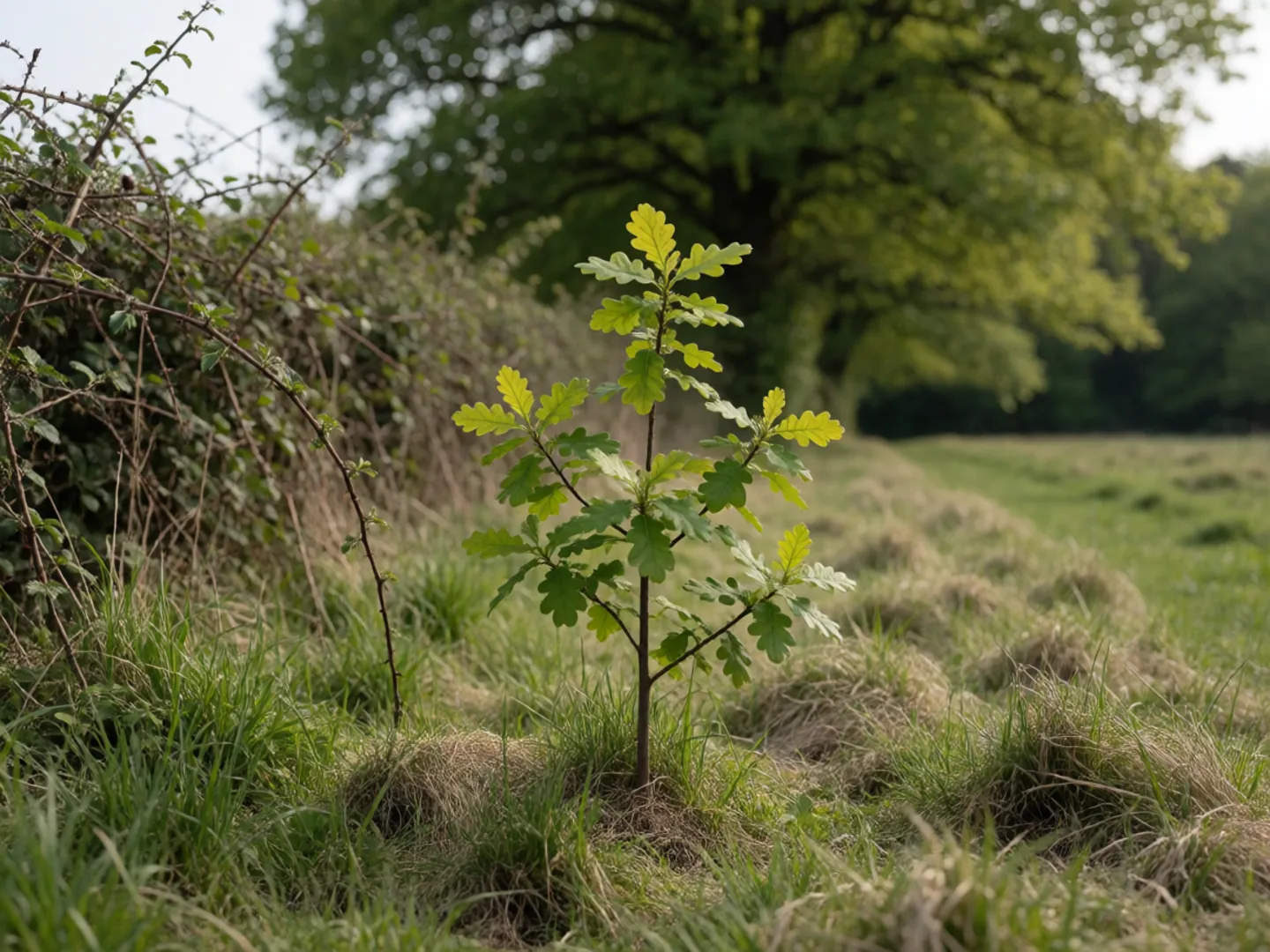
Researchers followed two fields in England left to nature in 1961 and 1996. The older one had 100% woody cover averaging 13.1 m tall after 53 years. Jays, grey squirrels and wood mice were probably the key distributors of the acorns.
The authors say seed-caching and berry-eating animals, particularly jays, appear essential for spreading tree and shrub seeds. Some researchers describe the jay and oak as a symbiosis: acorns help jays survive winter, and jays help oaks spread.
Questions
Yes. The jay, Garrulus glandarius, is in the crow family, Corvidae, and the RSPB calls it the most colourful member of the family.
Not on purpose. They bury acorns to eat later, and the ones they never retrieve can grow into oaks. The Woodland Trust credits this with the rapid spread of oaks after the last Ice Age.
Yes. The Woodland Trust says the jay is a skilled mimic, sometimes copying the songs and calls of other birds, as well as making its own screech.
Across most of the UK except northern Scotland, in woods, parks and mature gardens. They are easiest to spot in autumn when they search for acorns.
The Woodland Trust says jays, like all wild birds, are protected under the Wildlife and Countryside Act 1981, with some exceptions under Defra general licences. They are green-listed, the lowest level of conservation concern.
Sources
ABOUT THIS NAME
doodledjay.com is part of the DoodleSale portfolio. It isn't in an auction right now, but you can ask about leasing it.